
Coding agents are general agents: a normie's manifesto
Confessions of a Claude Code addict

As someone completely non-technical, having Terminal be my most-used app was NOT on my 2026 bingo card.
Ever since I discovered Claude Code, I’ve become hopelessly addicted. My life right now is basically work, family, and Claude Code.
I don’t have a CS degree. Studied humanities and social sciences, worked in journalism, VC, marketing, and product. Most artifacts I create are words: conversations, documents, content. I was always scared of code because I was never good at it, so I categorized myself as a “non-technical person.”
But I’ve realized something:
To engineers, code is the goal. To me, code is a means to an end.
To engineers, coding is a job. To me, coding is a hobby.
We’ve always reserved code to the sanctum of a special discipline requiring years of training. You’re either a professional engineer who spends all day coding, or you don’t code at all.
That’s changing. Normal people can now wield code as a tool to solve all kinds of problems in their work and life.
Whenever I post about vibe coding, someone in the replies objects: “but it doesn’t work in production.” Well, 99.9% of people never need to build anything in production. Most people don’t need to build software for other people. But everybody can use code to improve their own lives.
The concept of “personal software” has been talked about ad nauseam. But I’m talking about something even smaller. Things so small they barely qualify as software:
Using Claude Code to clean up your desktop or rename a bunch of receipts
Transforming one document format into another
Transcribing meeting recordings in bulk and drawing insights across them
Many of these workflows are boring and unsexy. Which means they’re actually useful. And no, they don’t need to be “shipped.” They just need to work for me.
This is why we need to differentiate “engineering” from “coding.”
Engineering is a career. Coding is a skill.
Engineering is a discipline. Coding is just a tool.
Engineering might be irrelevant or intimidating for most people. Coding doesn’t have to be.
I want to echo Amjad Masad’s point that “coding agents are general agents.”
All digital work can be enhanced, made more productive, or created by code. Because 0s and 1s are the stuff that makes up our entire digital life, and that’s also what code is made of. Theoretically, everything that happens on a digital device can be automated or created through code.
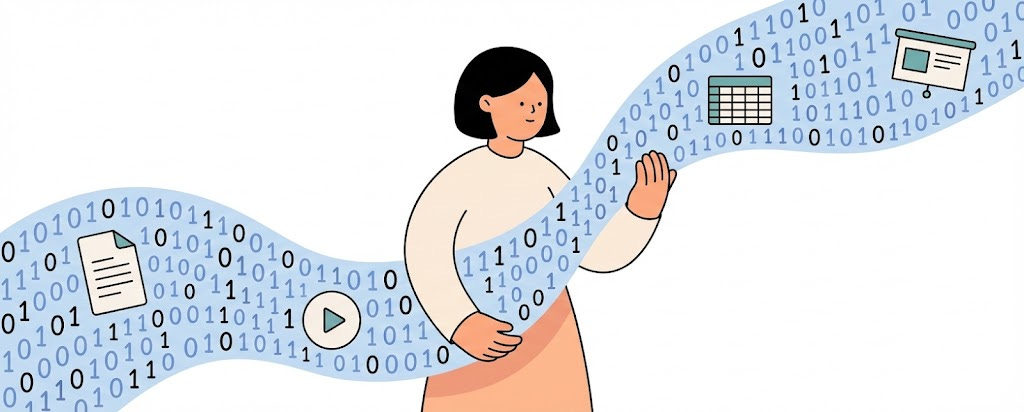
I’ve used code to make presentations far more interactive than traditional PowerPoint. I built an app that turns Japanese vocabulary into flashcard wallpaper images that shuffle on my iPhone lock screen. With tools like Remotion and ffmpeg, you can create and edit videos with code.
Consider content creation. We don’t traditionally think of coding as a content creation tool. But if you think of content as laying out pixels on a screen, it absolutely can be done through code. Word docs, Excel sheets, PowerPoints, data visualizations, greeting cards, children’s books, habit trackers, wedding invitations...
You don’t need to be an engineer to use code to achieve your goals.
In fact, I’ve observed that non-technical people tend to have the most interesting ideas when it comes to vibe coding. While engineers immerse themselves in the solution, non-technical people immerse themselves in the problem. A lawyer, doctor, or marketer who uses code can automate the exact pain points in their workflow, pain points an engineer might never encounter.
I’ve experienced a burst of creativity since discovering vibe coding. More than 60 ideas sitting in my notebook: pent-up demand from years of wanting to create software but not being able to. Now that I have this newfound power, I can’t stop.
While my engineer colleagues spend their workdays coding, I spend my weekends and evenings coding. While engineers consider coding a serious endeavor, I consider it a fun hobby. While AI coding tools help engineers improve efficiency, they help me turn the impossible into possible.
When I’m vibe coding, I feel powerful. Like I unlocked some form of magic.
And if I can do it — someone who studied humanities, who was scared of Terminal, who categorized herself as “non-technical” for a decade — so can you.
I used to think “non-technical” was an identity. Turns out it was just a skill I hadn’t learned yet.
Like your distinction between coding and engineering. People always confuse the two.
Yes, AI is enabling non-engineers with coding skills to achieve a lot more than they used to. No, AI still has a long way to learn the profession of engineering to replace engineers.
I wrote this admittedly in French which expands on your point, or so I believe. (https://www.linkedin.com/posts/christopheromei_ia-claude-application-activity-7421824610037305345-Pk2V)